Table Of Content
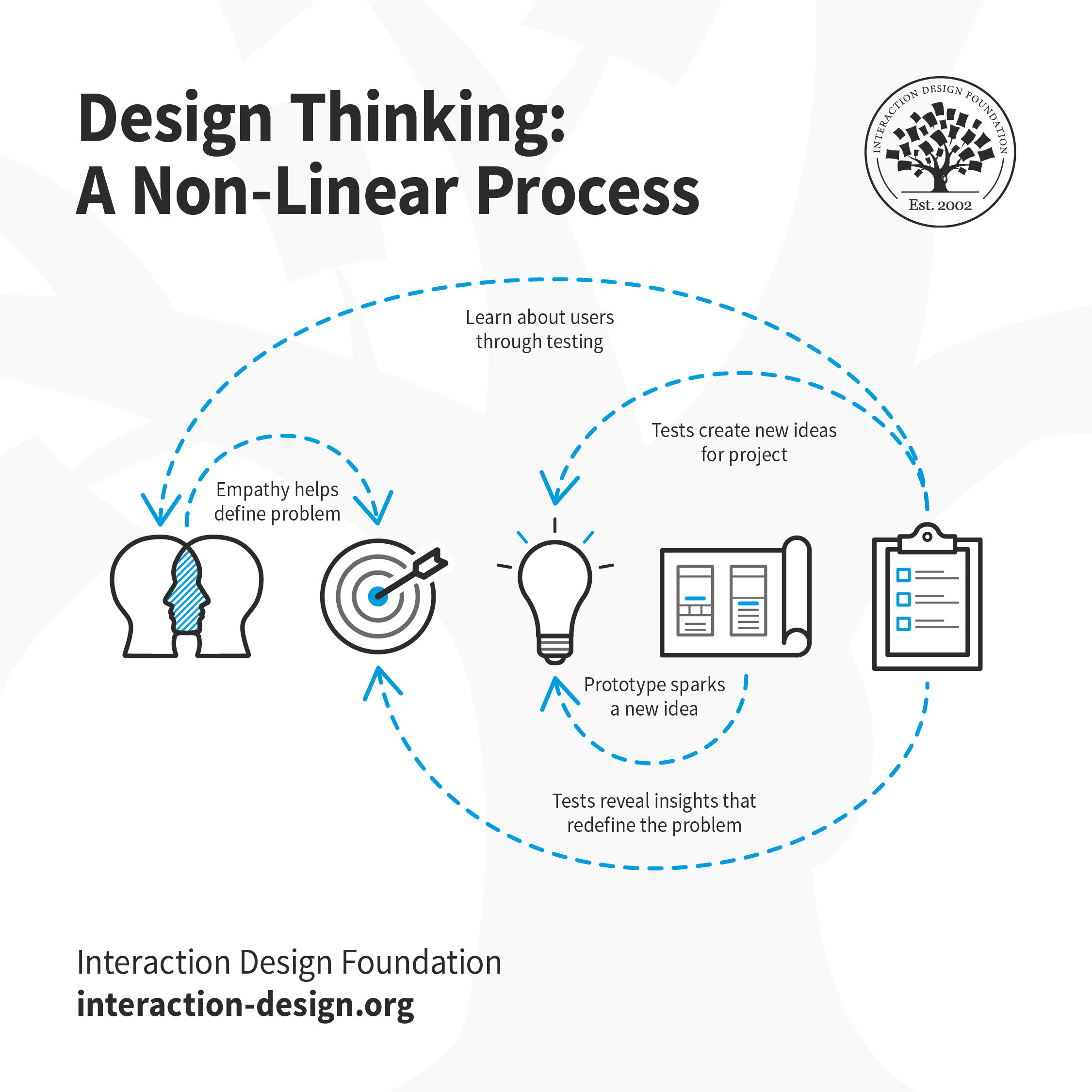
Without user stories (or closely related job stories / jobs to be done) teams would be overwhelmed trying to compare all the competing insights and user goals. It’s best to generate as many specific user stories as possible before converging on the top opportunities in a later activity. Instead of trying to jump from mountains of research data straight to ideas, the Design Thinking steps help unpack the black box of creativity, and provide clear objectives for collaboration. Each step of the Design Thinking process works through a handful of core activities, completed with an array of tools. Just because you finished Step 5, doesn’t mean you’re done—you may need to go back to Step 3 to generate more ideas, or back to Step 4 to prototype a different solution. Design thinking is never really ‘complete’ because the process is non-linear and iterative.
The Ultimate Guide to UX User Stories [With Examples]
One of the first people to write about design thinking was John E. Arnold, professor of mechanical engineering at Stanford University. In 1959, he wrote “Creative Engineering,” the text that established the four areas of design thinking. The testing phase will quickly highlight any design flaws that must be addressed. Based on what you learn through user testing, you’ll go back and make improvements. You can also pursue an online course or workshop that dives deeper into design thinking methodology.
The Double Diamond - Design Council
The Double Diamond.
Posted: Thu, 11 May 2023 08:34:53 GMT [source]
The Ultimate Guide to Understanding UX Roles and Which One You Should Go For
It was published by the British Design Council in the early 2000s, and helped crystallize underlying concepts for the working world. Specifically, the Double Diamond model depicts how the two phases of divergent and convergent thinking work together to develop ideas. Other common cyclical Design Thinking models include those published by Nielsen Norman Group and IDEO. Learn about the Design Thinking process powering today’s most user-friendly products, services and solutions. You can use it to inform your own teaching practice, or you can teach it to your students as a framework for real-world projects.
Products
This can be a practical path if you want to improve your design thinking skills or require a more collaborative environment. You might consider developing your communication, innovation, leadership, research, and management skills, as those are often listed alongside design thinking in job postings and professional profiles. If you want to learn design thinking, take an active role in your education. Start polls, problem-solving exercises, and debates with peers to get a taste of the process. It’s also important to seek out diverse viewpoints to prepare yourself for the business world.
Common Low-Fidelity Prototypes and Their Best Practices
For instance, someone from marketing might have a great idea about how to differentiate our new product from existing language learning apps. Create a user persona (the archetype of your ideal user), and conduct a series of interviews with people who represent your user target audience to learn more about their personal goals and lifestyles. Try to understand if the product can fit naturally into their daily routine. In our example, we want to figure out when users have a half-hour of free time to use the app so that we can tailor our reminders. Design thinking is about finding the best possible solution for the people who will use your product.
Traits that are common across design thinking processes:
They claim their system is flexible and versatile so it can be used for any type of problem, in any type of setting. The process unfolds through either a single set of activities or a combination of multiple methods—the latter being required for more complex challenges. As you’d expect, many large corporations have also adopted design thinking. IBM has adopted it at a company-wide level, training many of its nearly 400,000 employees in design thinking principles.
What are the 5 stages of design thinking?
If you’ve just started to embark on your journey into the field of design thinking, you may have noticed different frameworks cropping up here and there. This is nothing to worry about—it’s simply the result of different people’s perceptions of the design thinking process. To help you get your head around these interpretations, we’ve prepared a useful summary of the most popular design thinking frameworks used by global design firms and national design agencies.
Core Design Thinking Ideate Activities
The DeepDive™ technique was developed by IDEO as a way to rapidly immerse a group into a situation where they can effectively problem-solve and generate ideas. They expressed this variant of the design thinking process live on ABC Nightline back in the late ’90s. The earliest versions of the design thinking process still reflected the traditional design process. As design thinking evolved, however, deeper empathy, more collaboration and a multidisciplinary approach were thrown into the mix. The d.school also represents this 5-stage process through their hexagonal design thinking visualization. This ensures the stages are seen more as enablers or modes of thinking, rather than concrete linear steps.
Stage 1: Empathize—Research Users' Needs
It integrates the intellectual, emotional, and practical aspects of the creative process. Traditionally, companies begin with feasibility or viability and then try to find a problem to fit the solution and push it to the market. Design thinking reverses this process and advocates that teams begin with desirability and bring in the other two lenses later.

This includes the mastery of tools, techniques, and materials, as well as the ability to implement and execute design ideas effectively. Once the team identifies one or more solutions, they determine whether the organization can implement them. In theory, any solution is feasible if the organization has infinite resources and time to develop the solution. However, given the team’s current (or future resources), the team evaluates if the solution is worth pursuing. The team may iterate on the solution to make it more feasible or plan to increase its resources (say, hire more people or acquire specialized machinery). For example, the transition from internal-combustion engines to electric-propulsion vehicles has highlighted emissions-intensive automobile production processes.
Imagine you are designing a new walker for rehabilitation patients and the elderly, but you have never used one. Certainly not, if you haven’t extensively observed and spoken with real customers. There is a reason that design thinking is often referred to as human-centered design. Creative brainstorming is necessary for developing possible solutions, but many people don’t do it particularly well.
Design teams use design thinking to tackle ill-defined/unknown problems (aka wicked problems). Alan Dix, Professor of Human-Computer Interaction, explains what wicked problems are in this video. Customers now have extremely high expectations for design, whether it’s customer service, instant access to information, or clever products that are also aesthetically relevant in the current culture. It goes beyond the traditional focus on the features and functions of a proposed product.
Core activities in the Ideate step help structure brainstorms and inspire new perspectives with creative tools like Brainwriting and SCAMPER. The Ideate step is usually revisited several times during the design thinking process as teams reframe opportunities and refine their solutions. Designers or evaluators rigorously test the complete product using the best solutions identified in the Prototype stage. This is the final stage of the five-stage model; however, in an iterative process such as design thinking, the results generated are often used to redefine one or more further problems. You can then proceed with further iterations and make alterations and refinements to rule out alternative solutions.


No comments:
Post a Comment